

What’s In Your Pod? The Science Behind E-Liquids
Posted by Kayleigh Kivell on
Have you ever thought about the science of what goes into an e-liquid before? Or ever wondered about what exactly the ingredients are that make an e-liquid? Well, call me Bill Nye the Vaping Guy, because we’re going to explore all the science behind e-liquids!
What Is E-Liquid?
E-liquid is the consumable fluid used inside vaping devices that come in lots of different flavours and brands. When e-liquid is heated by the vaping device, it transforms into an inhalable aerosol (also known as vapour).
 The Core Components
Every e-liquid relies on a specific formulation of 4 fundamental ingredients:
- Propylene Glycol (PG): a synthetic, tasteless and odourless liquid
- propylene glycol acts as the primary carrier for flavourings
- This ingredient provides the sharp “throat hit” that mimics the sensation of smoking cigarettes
- Vegetable Glycerin (VG): a thick, sweet carbohydrate derived from plant oils
- this ingredient is responsible for vapour production (also known as clouds) and softens the harshness of the throat hit
- Flavourings: are food grate artificial or natural flavour molecules
- Mixologists layer these using top, middle and base notes to create complex profiles, ranging from fruits to desserts
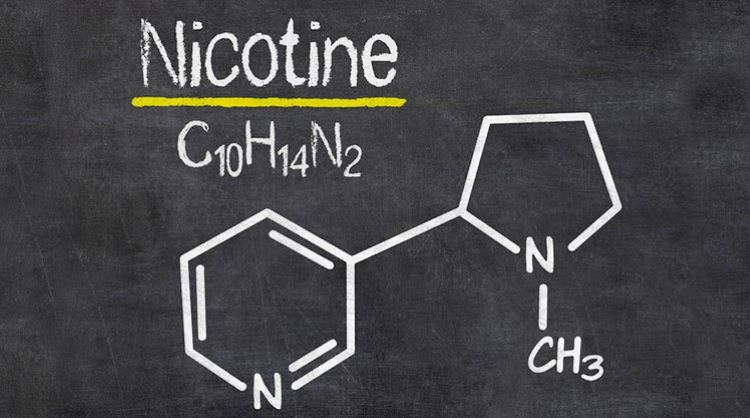
- Nicotine: available in either traditional freebase form (which delivers a stronger throat hit) or nicotine salts (which use benzoic acid to power the pH, allowing for a smoother draw at higher concentrations)
What About The Icy E-Liquids?
Wondering about how mixologists add the icy or minty flavour into your favourite e-liquid? Let’s look into the key types of cooling agents in e-liquids:
Menthol:

Menthol is the most widely recognized cooling agent used in e-liquids. It is derived from mint plants and delivers an immediate and intense cooling effect.
- Primary Effect: rapid cooling concentrated on the tongue, palate and oral cavity
- Best Use: balancing sweetness and adding freshness to mint, fruit to candy flavours
N,2,3- Trimethyl-2-isopropylbutanamide (WS-23)
WS-23 is a synthetic cooling agent renowned for its smooth, sustained cooling effect. Unlike menthol, WS-23 lacks a minty aroma, making it a versatile choice for a broad range of flavour profiles.
- Primary Effect: a sustained cooling effect across the mouth and throat without being overpowering
- Best Use: pairing with fruity or dessert flavours to maintain a balanced, refreshing profile
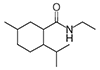
N-Ethyl-2-isopropyl-5-methylcyclohexanecarboxamide (WS-3)

WS-3 provides a gentler cooling sensation compared to WS-23, offering a more gradual and localized effect. It works well for those seeking a subtle chill without overshadowing other flavours.
- Primary Effect: a mild, cooling effect concentrated in the oral cavity, gradually extending to the throat
- Best Use: supporting creamy or lightly sweetened profiles
N-Isopropyl-2,3-dimethyl-2-isobutylbutanamide (WS-12)

WS-12 is known for its strong and immediate cooling impact. It offers one of the most potent cooling sensations among synthetic agents, often flavoured in high-intensity formulations.
- Primary Effect: an immediate, intense cooling sensation that extends to the nasal cavity
- Best Use: enhancing bold flavours like tropical fruits or intensely sweetened blends

The Science Of Ratios
The ratio of Vegetable Glycerin (VG) to Propylene Glycol (PG) determines how the e-liquid performs and dictates the type of hardware required.
- Higher PG (ex. 50/50 or 70/30 PG/VG): these have a thin viscosity, and these e-liquids wick easily into smaller, lower power mouth-to-lung (MTL) devices
- Higher VG (ex. 70/30 or 80/20 VG/PG): these make a thicker e-liquid and are designed for high wattage sub-ohm devices
- the extra thickness of the e-liquid helps prevent leaking and handles high heat without burning the cotton wick inside the device
Chemical Reactions
- Steeping: much like aging a fine wine, some e-liquids go through a “steeping” period
- this allows the concentrated flavour molecules to chemically bond and meld with the PG/VG base, resulting in a smoother, more complex flavour profile
Ready To Buy An E-Liquid?
If you’re ready to purchase an e-liquid, come on in to either of our Vaping Story locations to check out over 15 different brands of e-liquid!
667 King Street East Unit B, Hamilton
613 Somerset Street West, Ottawa
Must be 19+